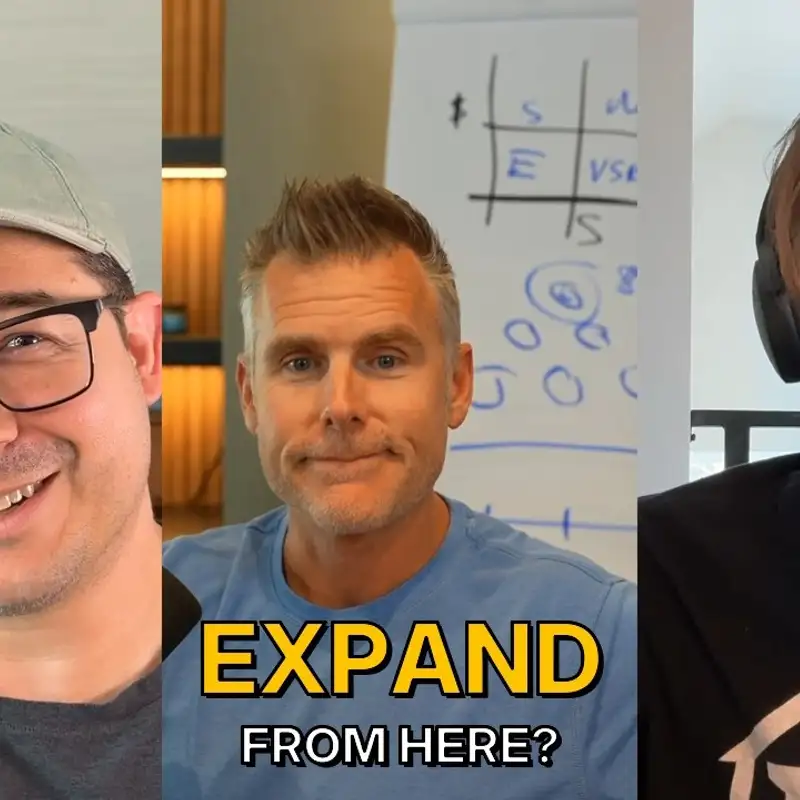
E07 w/ Dan Martell: 1 big logo won't get him the next 10
Download MP3Jason Cohen (00:00)
The star of today's episode of Smart Bear Live is a founder who sold a seven figure marketing agency and is now running an AI company that's already generating millions in revenue. But almost all that revenue comes from a single customer, big customer.
Jason Cohen (00:14)
So the business is at risk and the business isn't growing as fast as it could be, given that the software obviously works. So today we are gonna help him figure out how to take this product and sell it to other customers.
Jason Cohen (00:25)
And who is this we, you might ask? I'm Jason Cohen, known online as Smart Bear, and I founded and run two unicorns over the past 25 years, that's Smart Bear and WP Engine. I've both bootstrapped and raised hundreds of millions of dollars, I've invested in 60 startups.
Jason Cohen (00:39)
And for 20 years I've written about building companies, and I just now published a book called Hidden Multipliers, woo-hoo, which has all my best ideas about how to grow your business. Okay.
Jason Cohen (00:49)
And joining me to help our star founder is the great Dan Martell. And Dan has a
Dan Martell (00:54)
What is up!
Jason Cohen (00:54)
long history of being a successful entrepreneur who then became a world-renowned coach. And he's the author of popular books like Buy Back Your Time and Software as a Science.
Jason Cohen (01:03)
And he also runs SaaS Academy, which is he does this kind of thing all the time for member companies. So welcome, Dan.
Dan Martell (01:10)
I appreciate you having me, Jason and George. Honored to be here. I'm excited. I love diving into to the real problems with founders that are building really cool things and today is that day.
Jason Cohen (01:21)
yeah. So let's turn to the star of the show, George Paladichuk with his company Nail. Nail is an AI receptionist for home service franchise brands. So that's like roofing, fencing, HVAC, stuff like that. It handles voice, text, and web chat for them. So George, maybe you can get us started by correcting my pronunciation of your name.
Jason Cohen (01:42)
Filling in a little more detail about where the business is right now. Not the whole history, just just enough so we understand what's going on right now and what you want us to accomplish today.
George Paladichuk (01:50)
Yeah, a hundred percent. thank you guys for having me here. This is awesome to be here with two legends right now. I'm very excited about that. But yeah, you got pretty much all of it. the business right now is just about a year old and about nine months ago we got signed with Superior Fence and Rail, which is the largest fencing franchise in the world right now. And we've been doing really good with them. they occupy about ninety percent of our revenue.
George Paladichuk (02:15)
as it sits today. And I have really grown the relationship with that brand. but I'm looking at how we can expand into maybe another market segment or something like that. And that's really why I wanted to reach out to to Jason and Dan to get on this video and and work through a lot of that. biggest bottleneck for us right now.
Jason Cohen (02:33)
Well, it's not even a different market
Jason Cohen (02:34)
segment, right? it's other customers at all, right?
Jason Cohen (02:37)
how did you get
George Paladichuk (02:37)
Right.
Jason Cohen (02:37)
this one?
George Paladichuk (02:39)
so this actually came from a referral. one of my earliest customers, his name's Dan Blanc of Fence King, shout out. he was very pivotal in the start of our business and he is friends with the former brand president of Superior Fence and Rail, Zach Payton.
Jason Cohen (02:51)
Okay, so so is this hard it was
Jason Cohen (02:53)
this hard referral, so it's not nothing you could repeat. Yeah,
George Paladichuk (02:55)
Yep. No, not necessarily.
Jason Cohen (02:57)
yeah. Okay. And then a just broad question before we jump into that is AI receptionist, like there's 800 companies doing this, and that's probably lowballing the number. Some are well known and popular, there's a lot of startups doing it. So I also have to ask, like, what the heck?
Jason Cohen (03:12)
Clearly it's a need. I don't think that's in doubt at all. Why are you doing it? Like why why are you the eight hundred and third company doing this?
George Paladichuk (03:18)
Yeah, yeah, yeah, yeah. like you had mentioned, I had a marketing agency beforehand and I felt it was really hard, to kinda stand out against the crowd. 'cause there's a million and one marketing agencies and so that's what I really started to get into the SaaS world and specifically in the AI world, like two or three years ago.
Jason Cohen (03:33)
And and so what's the answer
Jason Cohen (03:34)
of of like why are you doing this comp company when there's eight hundred competitors? Is it different somehow or you're called to do it or
George Paladichuk (03:38)
I think I
Jason Cohen (03:40)
what's going on?
George Paladichuk (03:41)
I think that for the type of customer that I serve, especially especially in franchising, there isn't really like a a go to, right? There's some some really big brands that have all this VC capital. Right.
Jason Cohen (03:51)
Yeah, that's what I just said. There's eight hundred of them. So why are you doing one?
George Paladichuk (03:56)
because it works and there's a need for it and I found a niche that I've been able to serve really well.
Jason Cohen (04:02)
Okay, that's fair enough. Just wondering if it was like different in some way or some personal thing.
George Paladichuk (04:06)
I
George Paladichuk (04:07)
I think because we have been able to kinda niche into the franchise space, we have specialty knowledge of how to run the system specifically for a franchise brand, which is very different.
Jason Cohen (04:16)
okay, that's interesting.
George Paladichuk (04:18)
yeah. And so I think that there's some, special case knowledge there, but that would probably be the correct
Jason Cohen (04:23)
So
Jason Cohen (04:24)
your ICP is clearly not a solo practitioner because the the whole idea is if you're a franchise system, there's gonna be a standard operating procedure that everyone's doing, there's some kind of like structures there that are not true of a solo practitioner. And if you're able to do that well, that is different from random people like I'm I'm doing Main Street and I find a dentist, and that that's a different thing. So that is already something new. So that's good.
Jason Cohen (04:43)
And so how would you characterize the exact issue? I mean, we said to to find more customers. Okay, is that it? Or like do you wanna make that a little crisper? You said maybe even thinking about different markets, or like how are you thinking about that?
George Paladichuk (04:53)
Right, right. I would say that that's kind of the generalization of the of the bottleneck right now. that and enterprise being really slow as it is. I am kind of a a chronically impatient person, n number one, but number two, I also think that the type of business that I'm doing, I mean you said it yourself, there's a lot of people that out there that are doing it really, really well. but given the advancements in the technology that we're using today, I don't think that this
George Paladichuk (05:22)
type of business is going to be sustainable for the next 10 years. And so I want to move quicker than what we're doing right now. And enterprise just doesn't allow us to move as quickly as I want to. And it also doesn't allow us to have as fast of a feedback loop as I want. I think feedback loops are really important, especially in the AI space. And having the ability to go local and do single operators I think would be able to provide us that. So
George Paladichuk (05:48)
I'm kind of in this crossroads of can I do both? Should I focus on one? What's more valuable than the other? That's kind of the main bottleneck I'm facing today.
Dan Martell (05:59)
And how big's a team? I mean, in regards to like full time, part time or full time equivalents, technical versus Okay. And what's the role breakdown?
George Paladichuk (06:04)
Three of us. Three of us. It's me.
George Paladichuk (06:08)
I'm doing marketing and sales. we have a a customer success manager, Annabelle, and just hired our head of product Yaya, who replaced one of my best friends, Zach Sense, who helped me kind of build the back end for the business up until now.
Dan Martell (06:23)
Cool. And from a product point of view, how stable's the code, the customer experience, the bugs, like do you feel like there's a platform there? Do you know how's the product side?
George Paladichuk (06:34)
I'd say it's pretty damn good. over the past couple months we've had some bumps in the road just because we've had some changes and some issues that we face with some of our vendor providers. but other than that, I think it's pretty stable and I'm very confident in the performance of it.
Dan Martell (06:48)
And then what about funding in regards to resources you have to redeploy in the company, savings, revenue? What's the capital opportunity?
George Paladichuk (06:58)
So no outside capital at all, completely bootstrapped, but we have around a hundred thousand dollars in cash reserves.
Dan Martell (07:05)
Got it.
Jason Cohen (07:06)
So the it's the the enterprise, of course, is the double edged sword. You're right, it's slow. But also once you're in, you're in, which is what you're currently experiencing. In fact, you might even say the company is successful because you picked an enterprise customer that you got into. on the one hand, you say, Well, I don't like it, it's like, well, that's that's what it is. And in fact, it's what's successful. And it also will set you apart a bit from everyone else. If you go and sell to
Jason Cohen (07:29)
solo Main Street companies, you I don't know why you're different from anyone else. You already right now you've selected well, yeah, I don't know if you selected, but you fell into franchise, which has all kinds of benefits. You get a few, then you get them all eventually. So it grows automatically in that sense, especially if it's a healthy franchise. That's insanely valuable.
Jason Cohen (07:49)
anyone that tries to sell to Main Street one by one knows it's like brutally almost impossible. Almost everyone fails to do that. Even Groupon basically failed to do that. And they had the best sales team in the world for that. That's really the asset Groupon made is the sales team that actually was able to sell the local small things, even though we all know what the what that product was like. And that was one of the big things is that no one had cracked it before Groupon. And I would argue perhaps no one's cracked it since.
Jason Cohen (08:18)
I mean, Google can barely get people to put their businesses on Google, so they have to have SEO people do it for them. Toast of course that's restaurants only, but Toast is another one of these like incredible things because how in the world did you get restaurateurs to do anything, you know? And so the idea of going from like, okay, I know who all the franchisees are. Like I could literally make a list, I'm sure, of here's all the fencing companies in America, here's all the roofing companies in America.
Jason Cohen (08:42)
Here's all the HVAC companies, Well, that's your target market. Now, of course, there's still the question, well, how do we do that? And okay, yeah, I I know it's not trivial. But like this is ABM type of marketing now. I can list them all the all of them, and then your job is to go get them, and then we can talk about how to do that. You compare that, which is like hard but well understood, to
Jason Cohen (09:03)
God help you find the plumber who already doesn't answer the phone for his own clients and you're gonna sell them some software. Like, my God, dude. Good, good freaking luck. And how much is he paying you for that? Not enough for all the effort it takes to call him. So to me, it just sounds like you have this thing, which you're right, has all these downsides.
Jason Cohen (09:21)
But here you you are in a place that's enviable. And you're like, I want to go to a much harder thing where everyone's competing and it's almost impossible to sell. Now that I've had success in some different area. And that's why I'm is it grass always greener, really? Like you've got something. but given what I just said, how does that hit you? And are you sure you want to run away? Or
George Paladichuk (09:41)
Yeah, yeah, yeah. I think the biggest thing for me is number one, I'm chronically impatient. I see, a franchise account can be worth, seventy thousand dollars a month, but it might take six months from first contact to that for that deal to materialize. and that's just
Jason Cohen (09:55)
That's very fast.
Dan Martell (09:57)
Yeah, that's way fast. Eighteen
Dan Martell (09:58)
months plan for it. Well, I guess my question to you is what what questions do you have for us? 'Cause like there's the concentration risk, there's the go to market, there's the product, there's the team limited resources, capital. What what question would you have that would be the most helpful?
George Paladichuk (10:17)
I guess
George Paladichuk (10:18)
It's like, do I stick with enterprise? But if we're gonna stick down that, Number one, it would be what's the best way to continuously attract enterprise level deals and then make sure that they're happy, make sure that I'm fostering that relationship over and over again. number two is how do I make sure that those
George Paladichuk (10:34)
people have the best customer experience so that they stay with me
Jason Cohen (10:37)
So I think first of all, is this decision actually made? This is a big deal, if so, because you've said you've wrestled with this every week. it's okay if it's not. It's okay if we need to wrestle with it more. I just made a case for the other side, but that doesn't mean I'm right yet. Because you can make a case for the other side, right? But you don't like long sales cycles. Six months is a fast enterprise sales cycle.
Jason Cohen (10:57)
I know that feels long, but let me reinterpret what you said. I can get almost a million in ARR per customer every six months. I just need a pipeline. Okay, almost any bootstrapping founder would be thrilled if the way the math worked is it takes six months for me to add another half to one million in ARR. That's freaking insanely good. And now the question is, like you said, like how do I get them and how do I make that a little bit more systematic and so forth?
Jason Cohen (11:25)
It's not gonna be scaled and regular right now, but still, how can we go from one to not what just one? Right. You know.
George Paladichuk (11:30)
Right.
Jason Cohen (11:30)
Do you see that and you're like, okay, I'm resigned now to do enterprise or because you you say you want to move faster. I don't believe you that a small plumber just magically moves really fast.
George Paladichuk (11:42)
Yeah. I think it my moving faster comes in the number of deals in a in a period of time, regardless of the deal size.
Jason Cohen (11:52)
How important
Jason Cohen (11:52)
is that to you versus things like what you have a strength is and what your business model is?
George Paladichuk (11:57)
I think I I think you're right. I think it's me number one, having incorrect expectations for what actually is good. And I think that hearing it from you, you know, verifies for me that what we actually do have is is very good and six months to twelve months sales cycle really isn't that bad, especially for the size, stability, and longevity of the types of clients that I am bringing in. so yeah, I think
Jason Cohen (12:23)
Yeah. 'Cause you know a small plumber,
Jason Cohen (12:25)
the cancellation rate's gonna be really bad for you.
Dan Martell (12:27)
Yeah.
George Paladichuk (12:28)
Exactly.
Dan Martell (12:29)
I'm gonna because I a
George Paladichuk (12:29)
Exactly.
Dan Martell (12:30)
marker in my hand, which means I have to use it. Okay,
Dan Martell (12:32)
So the way I think
George Paladichuk (12:32)
Don't worry.
Dan Martell (12:33)
about you know markets, you have you know, small, medium enterprise, okay? You have essentially money and speed. Okay, so when I think of like who's gonna pay me the most money but the slowest, that's your enterprise. So that's down here, okay. So that's the client you have right now. Who's gonna
Dan Martell (12:54)
be slow and pay me very little money. the VSBs, that's the mainstream people. Very they're called very small businesses. Remember constant contact that Yelps. This is okay, so this is a I call them VSBs because they're the mainstream. Okay. They don't even know they have a problem. Because they just think I don't have enough leads. They don't even know they need AI automation. Then you've got you kind of like small business that's got a little bit of money but they're still slow. And then you've got ones that are faster that you
Dan Martell (13:24)
Usually
Dan Martell (13:24)
is mid-market. And I'll tell you why mid-market is interesting, is that it's kind of like you've you know, and they've used this analogy so many times. I think I might have heard it from you, Jason. But you the rabbits, you got the deers, you got the elephants. Okay, the enterprise is the elephant. You can get one deal making a mill and an ARR, that's an elephant kind of hunting. Then you've got the little tiny mice, then you got the rabbits, but the deer has more meat on the bone and there's higher velocity because in a sales cycle, okay, and that's why when you said six months, I love the
Dan Martell (13:54)
Optimism, let me just tell you why it's it's a little flawed is the bigger the business, the the more time people need to have discussions, test, assume, plan, board meetings, approvals. Like literally, this this on average for enterprise is 16 months. And you're right, a small business owner, if you can get them that they're problem aware and they're looking for a solution, you can get them to purchase in 25 minutes. The problem is that they also don't make you a lot of money because they're not going to stick around, which is Jason also mentioned.
Dan Martell (14:24)
mention right the the the retention rate so the the you know a small if you're selling to the business owner which I think you may be on a on a mid market or you might be selling to a team like a CS team or inbound marketing team right then you're probably looking at like three months versus you know you can get a small business but it's like how do you talk to them how do you get them to to come in so the the big idea is
Dan Martell (14:53)
Indecision is a decision that slows you down. Most businesses fail because they don't make a decision about their go-to-market. And I think that's what Jason's trying to say is like, look, it sounds like you guys keep waffling. We need you need to make a decision. And the good news is you can win in all of these, but you can if you don't pick. And then there's different levels of pain at different levels of, you know, the
Dan Martell (15:18)
Like to make a you'd have to create a bio product for a a mainstream customer, like a mainstream, you're gonna have to just like there's something in the product, some kind of freemium that gets the distribution, the word of mouth, and the like like it's just harder. Whereas the mid-market, you can go after. Then I'll just leave with this and then we can open it up for questions. Then we've got the bowling pin strategy. Okay. Right now you have a customer that's paying you, and they look like this, right? That's the customer.
Dan Martell (15:47)
If you try to go after a completely different market, whatever traction you have there in regards to case study, domain expertise, referral like reference ability as a in a sales cycle,
Dan Martell (16:01)
you know, infrastructure for billing, how to talk to these people, you're gonna have to start at ground zero, right? And
Jason Cohen (16:08)
Right.
Dan Martell (16:08)
what I would say is if you already have a customer there, but you don't like the enterprise because it's a slow sales cycle and you just don't think you can replicate it because of the experience, then you might entertain the close cousin to that, but still in the same industry. Cause if I've got a customer in the fencing space, Jason said it, like the biggest thing I'm looking for is how do I find other people? If I can pull a list,
Dan Martell (16:31)
off of LinkedIn or Google Maps or whatever and do some some some data enrichment and then be able to say like I'm looking for organizations that are between two and 10 million and I'm looking for this type of person because I need a hiring I need somebody that's got the budget and the authority and the need and the timelines that map to me. I'm still gonna stay in fencing because I have I have they look up to the company you're probably servicing. They want to be like them. So sometimes that case study is worth its weight in gold because you'll be able to use that in a sales cycle to say like we're actually
Dan Martell (17:01)
Powering this company that I know that you guys are probably wanting to be like, and then you can figure out the next close cousin could be the roofing, right? But the the ability to pick one, like literally just one customer, one sales process, one follow-up process, one go-to-market, and NaiL that that you want to move fast, pick one and try to solve those problems because that alone is a lot of work to try to figure out.
Jason Cohen (17:29)
Yeah, there's a lot of crossing the chasm stuff in here that I think is applicable,
Jason Cohen (17:34)
switching to voice AI is is a forward thinking type of decision.
Jason Cohen (17:39)
And almost all Main Street doesn't think that way. they don't know what you just said when you said claude code. Like they don't know anything and they don't want to. And you know, maybe they're even afraid, maybe they even don't want to do it. which in crossing the chasm is called laggards or late majority. In other words, they don't want the technology until it's so saturated everywhere they just like can't help it and they're dragged in against their will into doing the technology. That does describe most most Main Street companies. And yet you're selling
Jason Cohen (18:05)
Cutting edge forward technology. So another dimension in all this. So we've talked about like, well, what industry are they in? Like fencing versus HVAC. So that's one. And it's best if it's in exactly the same, but okay, if it's very adjacent, that's not so bad. we've talked about things like enterprises versus mid-markets. so there's this other dimension then of how much are they going to accept new tech? And crossing the chasm does have a good
Jason Cohen (18:28)
system for this. We don't need to belabor the point, but you can imagine just just I I'm gonna not do it justice by saying this, but you can imagine a gamut that ranges from they're they're messing with it all on their own and they use cloud code too on one end, all the way to like, I will never use this. Maybe in 50 years you'll make me and I won't have a choice because my phone got cut off because we're not doing phones anymore, type of thing, right? And in that gamut of how much do they want to adopt technology
Jason Cohen (18:51)
You need to find the ones who are on, of course, the one end. Not not quite, they're doing Claude Code themselves. But they need to want to adopt it. And generally, the reason why people are like that is that they believe it will give them a competitive advantage. Now, this is this is a really critical point. The company needs to already believe before you get there, they need to get a technological advantage in the market. If they don't already believe that,
Jason Cohen (19:19)
Then you going in there and trying to force AI down their throat doesn't work. And that's most of Main Street. Right? And it's a different dimension than size. There are small, medium, and big ones that do and don't want new AI right now, right? So that's why it's a it's an orthogonal dimension of these things. But what's cool about this is each one of these dimensions starts narrowing down who's your target market. Right. And so each one of these is helping to
Jason Cohen (19:41)
narrow that into like the thing you're gonna look for. So let's suppose you said, yeah, I'm going for mid-market or enterprise, whatever you decide. And yeah, fencing and maybe, maybe a couple of adjacent ones, so another one is they have to be looking for tech now. So how would you know that? That's a good question. How would you know? Well maybe they're searching for it, of course. Maybe they're going to a conference about using AI in whatever their industry is, because only the people actually interested in that go to that conference.
Jason Cohen (20:05)
And that puts them in the like top one percent of their industry in terms of wanting tech. So you going on stage on a conference for H VAC folks about tech could be like one of the best things you could ever do because you're because every single person in the room is perfect. You won't sell everyone, but like you're in the right room kind of a thing. Whereas you're just advertising out there, like you know, where the hell's that going. So there's probably even more
Jason Cohen (20:31)
Dimensions, and that's why this is so useful to try to say, like, yeah, so what are those dimensions? We've already named some. There's probably more to come. One might be is it franchisee or not? And you could decide. I'm thinking that that's yes, a longer sales cycle, but you have a reason why it's you and not someone else. Number one. And when they say yes, it's a much bigger deal, which is really sweet. and you've had success there. You don't have success anywhere else.
Jason Cohen (20:56)
So like to me that that that yes franchise could be another one of these. You might decide not. You might decide that's too specific or I don't know, whatever. But to me that's a that's an interesting one. If I am a franchise that's mid-size, I only I have, I don't even know what that means. So I'm gonna just say it's 10, 10 units or 10 franchisees. I don't know if that's right. And there's another one that's the big dog that has 150 in my state or whatever. And I'm the one with 10. I'm trying to get from 10 to 20. That's my goal for the next two years. How do I do it?
Jason Cohen (21:25)
Well, maybe since I'm smaller and I'm hungry and I've got to figure out how to beat the 150 person, maybe I'm willing to take a risk on some tech. So it could be that if you add in this thing of you need to be tech forward, you might discover, the mid-market are the hungry people who are willing to use new tech to get an edge. Whereas the bigger people are like, I don't know, we don't need it. I'm scared, blah, blah, blah, blah, blah that they don't want to do it. And that may be wrong. Maybe the big people are.
Jason Cohen (21:51)
Good to go. I don't know. But it could be. It could be that this hungry mid tech fo tech is how we're gonna win people.
Jason Cohen (21:58)
in in Geoffrey Moore's crossing the chasm, he would call that early adopters. So, okay, that's that's the name of that. All right. this is the way to think of like, hmm, how do I put these dimensions together? What's at least self-consistent in this?
Jason Cohen (22:11)
To try to form these theories of like what's a good ICP for me? And each time we add a dimension and a theory, we're narrowing it down. And your fear might be, but if we get it so narrow, there's only three companies in there in Texas or whatever, right? And and that's the you shouldn't worry about that because in reality, not every customer will be perfect. In reality, they'll have four of these and they'll still be a customer. Like the truth is a lot more people than just the super ICP you'll in fact sell. You you will.
Jason Cohen (22:36)
But by getting the ICP super crisp and super narrow, you'll know what you're doing, what you're seeking, what to put on the homepage, what to put in the ads actually, cause cause what are they gonna be triggered by? And then when people who are like Dan said are adjacent in any dimension, okay, it's still on the right ballpark. your positioning is still good. Dan and I both have just been lecturing you now. How
Dan Martell (22:54)
I Jacob, I
Jason Cohen (22:55)
how's this striking you
Dan Martell (22:57)
Yeah, George, what's your thoughts on this so far?
George Paladichuk (23:00)
I think it's time to draw the line in the sand and just commit to doing enterprise. I hate the fact that I waffle back and forth. That's one of my biggest pet peeves about myself, so I wanna just call it here and at least I'm doing it with you guys so that I actually have some real accountability, which is nice. But yeah, I'd say let's just go with
Jason Cohen (23:17)
What do you mean
George Paladichuk (23:18)
Enterprise.
Jason Cohen (23:19)
what do you mean when you say enterprise?
George Paladichuk (23:22)
mostly franchise. So home service
Jason Cohen (23:24)
Well then
Jason Cohen (23:25)
say franchise and don't say enterprise. Enterprise means something.
Dan Martell (23:27)
See how clear see how clear if you say to somebody like who do you work with, franchisees or like franchises, like franchise platforms versus enterprise?
Jason Cohen (23:35)
Yes.
Dan Martell (23:36)
'Cause enterprise I'm thinking Fortune two thousand and you mean Chick-fil-A. And they could be the same thing, but it's a different focus.
George Paladichuk (23:43)
Right, right.
Jason Cohen (23:44)
See,
Jason Cohen (23:44)
when I think franchises, I
George Paladichuk (23:44)
Okay. So yeah.
Jason Cohen (23:45)
think I bet most of them have three locations, a franchise. Like what's the median median
George Paladichuk (23:50)
Yeah. So I'm gonna say
Jason Cohen (23:51)
number of franchisees for a franchise?
Jason Cohen (23:54)
Yeah, I don't know either, but like with restaurants, there's a lot of lot of restaurant groups that have like four restaurants. A lot. I know you're not doing restaurants,
George Paladichuk (24:01)
Okay.
Jason Cohen (24:02)
I'm just for example.
George Paladichuk (24:04)
So I would say then home service franchise brands with at least twenty operating locations.
Dan Martell (24:12)
Yeah.
Jason Cohen (24:12)
Wow,
Jason Cohen (24:12)
see how good that's so good.
Dan Martell (24:14)
I as soon as you said that I started thinking about where you can find those customers. The franchise,
Jason Cohen (24:18)
Yeah.
Dan Martell (24:19)
you know, the the magazines, the online, the podcasts. You get you can start to think about where they hang out. I always say it's you know, when I work with founders, like I was talking to a founder the other day in the similar AI space. I mean, 'cause this is literally everybody's AI anything, and we were talking about the concept of finding these early adopters. So one thing I always ask myself, like, what are the characteristics of an early adopter in
Dan Martell (24:42)
The space. if you think of like a fencing company, you know, what's public data that I could use because I want to try to do an automated fashion to find and identify them, they would tell me they're early an adopter. Now, this isn't perfect science, but if I go and they have a website, that's a good step. If they have an Instagram account, better step. If they have 1500 followers on Instagram, probably an early adopter because they understand the value of social media and they have followers. So like you just want to think about like what's the characteristics. So I told that to the the founder.
Dan Martell (25:12)
Back in the day I was working on an HR software with a company I invested in, and this is 15 years ago. But one of the things as an example for characteristics of an early adopter was we had 200,000 leads. How do we sort through them? Well, it turns out the domains that were using Google Apps for domain, before it was just called I think business, Google Business, that told us they were early adopters because they were using Google for their email hosting when back in the
Dan Martell (25:39)
day it used to be Outlook. And how can we automate that? the DNS settings.
Dan Martell (25:43)
So we took the two hundred thousand emails, ran it through a DNS script, and then all of a sudden we found the mail records that pointed to Google and it went from two hundred thousand to eighteen thousand, and those eighteen thousands were early adopters by definition because they were using other people's technology that told us they were early adopter. They bought at a three X rate higher. But it's not duh, 'cause it's what Jason said. They're they're people that are willing to take risks on new technology to give themselves an edge, because that is how they compete. In regards to
Jason Cohen (26:12)
Wait, wait, wait, that is
Jason Cohen (26:13)
so I just learned something because I've been preaching for at least a decade, if not two, that you get you find these characteristics, and the characteristics are usually not how many employees are there. It could be, but usually there's these other things that are the right characteristics. But what Dan just said, I for whatever reason, I never grokked, and it's so smart, which is you say, and then what other things are correlated with that? They aren't it, but they're correlated with it.
Jason Cohen (26:41)
And the correlates might be way easier to go find and search and get lists and attack and
Jason Cohen (26:46)
That's so brilliant.
Dan Martell (26:46)
wild one data.
Jason Cohen (26:47)
I never thought of that.
Dan Martell (26:48)
So
Dan Martell (26:49)
I built a company called Clarity. Jason was one of the experts on Clarity, and you know, it was a platform for entrepreneurs to get advice over the phone. We were trying to figure out who is the ICP to pay for calls. And and this is the the three F's that I always say. It's like you're trying to figure out who do they follow, what do they read, who are the experts that they know about, what do they spend money on? That's fund. So follow is the first one. Fund is paid. What are if I looked at their expense retreat again for the ICP, my perfect customer. So once I had at least 25 people do.
Dan Martell (27:18)
Doing calls, I had to figure out what's true about follow, fun, and then frequent is where do they spend time and they vote with their feet. And the correlate for that one, which is wild, was that they were Evernote users.
Jason Cohen (27:32)
Whoa.
Dan Martell (27:33)
Which, if you think about it, it makes sense because people that value cataloging information and would, and back then, this again, this is early days of Evernote.
Dan Martell (27:42)
that had an Evernote account before it became the second brain. This is this is literally 2012. Like second brain wasn't a concept really. And and all of a sudden now then I knew I could run my Facebook ads against people that used Evernote.
Dan Martell (27:55)
All of a sudden my ads perform five times better because I found that connective tissue. And I think that's that is the the as you know, the lean startup, they talk about this repeatable, scalable search process to find those characteristics. and if you find it, that's when it can go. And it's true for enterprise too. There are certain enterprises that are more early adopters than others. And
Jason Cohen (28:17)
yeah, for sure.
Dan Martell (28:18)
yeah, one of my favorite examples of this was because it's a really interesting data source that big companies use for account-based marketing.
Dan Martell (28:25)
ABM is you can buy data telling you what big companies use as internal software so that you know who to reach out to. And the way they do that is they scrape the job listing websites to figure out what software or must know for a company to tell you what tools they use internally, which is a wild data source to try to figure out. You know, it's not like a built
George Paladichuk (28:49)
That is crazy.
Dan Martell (28:50)
with which is public website data. It was literally internal, like do they use this financial software, this other one?
Dan Martell (28:55)
It's based on the job postings for the company. So another place to go look if you're like, hey, a lot of our customers use this kind of CRM or this kind of ERP, you can use their job post to reverse engineer into it.
Jason Cohen (29:07)
Yeah,
Jason Cohen (29:07)
so George, given that, either characteristics directly or these kind of correlates you know, Dan already mentioned some, but are some coming to mind immediately? Cause like you've already seen it, or even this one customer, one customer's not not data, okay, but still something.
George Paladichuk (29:25)
only a few I would say. Like for example, the brand we work with now, their whole CRM system and payment processing and all of that is proprietary. So they worked with a company called Future Twenty Three that built out their entire back end. it is fully proprietary and owned by them. So that obviously was very much so a a indicator that they were forward thinking.
George Paladichuk (29:52)
The other brands use it use Service Titan, which is a CRM in the space.
Jason Cohen (29:57)
Right. I mean the tools might be good, but besides tools, other external behaviors, like like again, actually being able to use social media is is an interesting signal. Are there any other signals like that, you know?
Dan Martell (30:06)
Yeah, if they have a snapshot, that's a pretty
George Paladichuk (30:07)
Yeah.
Dan Martell (30:09)
early adopter for a sized business.
Jason Cohen (30:11)
And like I I gave you one
George Paladichuk (30:12)
I would
Jason Cohen (30:12)
too. They go to a conference about it, which exists. Now, is that super scalable? well, in the early days when you're trying to get known at all and you're also trying to get your pitch down and you're and also just getting like one or two more customers would be huge if they're big enough, then conferences can actually be really good for that. They may or may not continue to be good. Often people find they end up not being good later.
Jason Cohen (30:34)
But early on they can be very useful to you because you don't need that many N for to be worth it and they don't know who you are yet. you learn a lot from it, whereas later on you're not learning that much anymore. So I mean we don't have to discuss that too much, but like that is one that that right now might be good. I in fact just yesterday I talked to someone who owns a whole bunch of auto repair shops. And she was saying how there's conferences for them.
Jason Cohen (30:57)
And and how some of them go there to learn about how AI could help with auto repair shops. So I know those exist. I just talked to someone who's doing it with their with her companies,
Dan Martell (31:06)
I I even think like again f fun, follow, frequent, right? So like you said franchisees, I'm thinking franchise lawyer.
Dan Martell (31:14)
There's probably
George Paladichuk (31:15)
Mm.
Dan Martell (31:15)
not that many that actually help incorporate and build out these franchise master agreements and they can walk you into those deals. Like that's to me, the partnership approach has always been my favorite go to market because you can leverage their trust and speed and you can take a sales cycle from eighteen months down to four months because they'll also help you calibrate, you know, if the person's in need or not, right?
Jason Cohen (31:37)
Yeah.
Jason Cohen (31:38)
Okay, so so along those lines. Yeah. So along those lines
George Paladichuk (31:39)
I agree with that. I love that. That's how we've gotten
George Paladichuk (31:42)
most of our big deals.
Jason Cohen (31:45)
So along those lines with providers or other people that can walk you in, you said that this big customer, they paid another company to make them a CRM. Who is that other company again?
George Paladichuk (31:57)
Yeah.
George Paladichuk (31:59)
feature twenty three. Mike Potts is the CEO.
Jason Cohen (32:00)
Okay. Is this the only time
Jason Cohen (32:02)
they've ever made a CRM for a Main Street company?
George Paladichuk (32:05)
no, they do they do work with a bunch of stuff. Mike Potts is actually an equity advisor in Nail.
Jason Cohen (32:11)
Okay. And so, and
Jason Cohen (32:12)
so, and so there's an example of a partner. Because what you can do is go to them and say, hey, we have a mutual customer. They love you for CRM and they love me for the voice stuff. they rolled it out everywhere. It's a crushing it. So you probably have other clients who might be interested in voice.
Jason Cohen (32:27)
I would love to see if there's a way to work together. And also, is there a way for this partner? How does the partner make money is always a good question. Like both of you need to make money, or this is not a deal. And it's forget deal. It's just not an ecosystem. If both of you aren't making more money you would have otherwise. So the classic way with consulting is that they have a new consulting engagement, or it's an extra SOP or
Jason Cohen (32:48)
their retainer is justified or you there's something in which they're making money in the usual way for them, like hours, projects, retainers, whatever it they happen to do, in implementing it.
Jason Cohen (32:57)
you want the annual revenue from the product. So they bring you in because they'll make money in their normal way and look good to their client. And you are happy because you're making money in the way you want most, which is ARR on product. And so that's your first call because you have a common client with success. But of course, then there's probably at least a hundred and maybe a thousand such people in a in the US, not to mention globally, but okay, the US.
Jason Cohen (33:21)
Where that's the case. And of course, that's a more of a cold call, but that's a whole nother universe of going to market through an agency. And of course, at WP Engine, we do do both. We go direct, we go through agencies, and we have literally hundreds of thousands of customers that were direct, and literally hundreds of thousands of customers that came through agencies. And we have thousands and thousands of active agencies in our partner program. And more that aren't active, but I mean that actually send deals fairly regularly and so on.
Jason Cohen (33:49)
The agency also has this, or or i it could be a partner. I'm stuck on agency because I know it and and and we just this the latest thing we talked about. They have this other great growth effect. One agency brings you a client and then another and then another at any time frame, even if it's just one a year, one every six months. Okay, but that's quote unquote automatic growth. Okay, not really automatic. But I mean, compared to going direct, compared to that, it's almost automatic, right? It's way easier, way cheaper, way more likely to close,
Jason Cohen (34:14)
And so it's worth so much effort and time to build a relationship with an agency who might bring you five and ten customers over a period of time or even quickly if they have a backlog of clients, right?
George Paladichuk (34:27)
Right.
Jason Cohen (34:27)
my God, is that worth your time?
Jason Cohen (34:28)
at least with this one agency, I don't know why you wouldn't try with the one just to see, cause because you have a friendly.
George Paladichuk (34:34)
Yeah, yeah, no, I I think that's a hundred percent true and and we've talked about that before too, so there's definitely conversations with that specific partner.
Jason Cohen (34:43)
And what did they say they would want in order to introduce you to the next client?
George Paladichuk (34:48)
nothing. He's like a big he's a big supporter. Like I mentioned, he's an equity partner in NaiL as well, so that helps. not a significant chunk, but we're
Jason Cohen (34:56)
well that's good. How come he hasn't done it already then? What what's he waiting for?
George Paladichuk (35:01)
we're we're moving towards one right now. But it
Dan Martell (35:03)
Waiting on George to
Dan Martell (35:04)
decide who he wants to sell to.
George Paladichuk (35:06)
P quite possibly, but
Dan Martell (35:07)
It's so interesting. Once you tell your go
Dan Martell (35:09)
to market and you're clear about it, people will come out of the woodworks to do referrals and support you because again,
Jason Cohen (35:15)
Mm.
Dan Martell (35:15)
a confused mind doesn't buy and a confused mind can't refer.
George Paladichuk (35:21)
Another
George Paladichuk (35:21)
another big opportunity we have is a lot of these franchise
George Paladichuk (35:24)
franchise brands are owned or operated by brand platforms. So for example, Superior Fence and Rail is owned and operated by Empower Brands, which has ten other brands underneath of it.
Jason Cohen (35:35)
Mm.
George Paladichuk (35:36)
I've had many conversations with Empower Brands and other brand presidents within it and so on and so forth. My biggest thing is I come from the Main Street world, right? So when I say that like these deals take too long and it took six months or it takes six months, whatever, that's long for me, right? And and these conversations are
George Paladichuk (35:55)
A lot different, and there's a lot more people involved. And I think the thing that I'm struggling with and why I was kind of waffling for so long is because I don't know how to continually move forward and nurture these conversations that end up turning into deals. and all of the content you see online and everything like that is is so focused on
George Paladichuk (36:14)
SMB or or smaller businesses and in that type of marketing that I'm I'm kind of at a loss of like, okay, I don't I just don't know how to fill the pipeline. Yeah. Yeah.
Jason Cohen (36:21)
Yeah, which which isn't work which is not working. Which is not working. Yeah.
Jason Cohen (36:26)
But I hear you that it's not obvious what to do. But I love the idea of or up the forest top and over to the other trees. It's obviously a really good thing to do and slow, but smart. Yeah.
George Paladichuk (36:36)
Yeah. So that's that's kind of like our next, most likely client is to come from something like that, but
Jason Cohen (36:42)
Wha wha what are they saying is the reason why they wouldn't
Jason Cohen (36:44)
want you to I mean, obviously it's working in one place and and they and and they have ten brands. So why don't they want to do it in the next brand?
George Paladichuk (36:52)
they do. We've had some conversations and they've pilotes.
Jason Cohen (36:54)
No, they don't otherwise they'd be doing it. What what is the reason why they
Jason Cohen (36:57)
don't want to do it right now?
George Paladichuk (36:59)
from what I've gathered, it's because they're trying to figure out which platform to pilot. They've piloted other versions of the same thing that we do and it hasn't gone very well. And so they've
Jason Cohen (37:11)
No, wait, wait, wait, wait, wait, wait.
Jason Cohen (37:13)
They have a brand that's working well here. So the pilot is finished with you. It works. There there's
George Paladichuk (37:16)
Yes. Yes, yes.
Jason Cohen (37:20)
no there's no what do we pilot. It works.
George Paladichuk (37:22)
E exactly. That's what I'm trying to that's what I'm trying to relay.
Jason Cohen (37:24)
Okay. So so that's not
Jason Cohen (37:26)
the reason. What is the reason why the second company, is it that none of the other nine companies wanna try it? Is it that the leadership doesn't want to make them or won't make a decision? Is it that they do want to pilot more things before
George Paladichuk (37:37)
I think it's I think its leadership won't make a decision.
Jason Cohen (37:39)
deciding? Like what's going on?
George Paladichuk (37:41)
I think its leadership won't make a decision.
Jason Cohen (37:43)
Do you think the member c brands want to do it?
George Paladichuk (37:47)
I think they've seen the success of Superior and have wanted to emulate that and have I've been told that, but
Jason Cohen (37:54)
How do you know they want to emulate that?
George Paladichuk (37:58)
some brand presidents have said that have have themselves expressed interest in starting a pilot but have been bogged down by leadership.
Jason Cohen (38:09)
I guess I I don't understand. What what what leadership are we talking about? The the the superparent?
George Paladichuk (38:12)
Like the the
George Paladichuk (38:14)
yeah, the holding company, the the larger
Jason Cohen (38:16)
So the holding company gets to
Jason Cohen (38:17)
decide whether they pilot something or not.
George Paladichuk (38:20)
it seems so.
Jason Cohen (38:22)
Well is it or not?
George Paladichuk (38:24)
I I believe so, yeah, 'cause they they were the ones who were controlling the other pilots.
Jason Cohen (38:27)
So what you see what I'm getting
Jason Cohen (38:29)
at here is like this is what you should be doing in these relationship calls. Of course, it's also just personal relationship. Of course. But the other thing is you need to know this stuff. Like, because what we're really asking is what is the mechanics for them buying anything, and in particular this thing? Who decides? What do they decide based on? What's going on right now in their minds? And you need to ask them and find out.
Jason Cohen (38:54)
And you can be you can be blunt and nice. You can be like, hey, of course we're super successful with whatever superior frencing. And you know, I talked to so and so over at brand number three, And he was like, Yeah, let's do a pilot. So he and I both want to do a pilot. Is that okay? Or like, who is it that has to say that's okay? Because he wants to, I want to. what is it that needs to happen for that to be okay? Does someone else need to green light it? Do we need permission from something?
Jason Cohen (39:20)
Can we just go do that and and and run that pilot real quick for three months?
Jason Cohen (39:23)
A lot of times if you're not used to sales like this, you f you feel like almost guilty or like you can't ask or like any any way to ask that is bad. But actually it it is the job in sales. I mean, among other things, one of the jobs is to know what's going on, who is the decision maker, what are all these roles, what's their timeline. And you ask is how you find out.
George Paladichuk (39:43)
Okay. Yeah.
Jason Cohen (39:45)
So,
Dan Martell (39:45)
So I
Jason Cohen (39:45)
the way to pick this back up is you just said, well, there's president of brand number three wants to do it. Great. You can just give them a maybe it's just an email, maybe it's a call and just be like, hey, I I know you want to do it. Obviously, I want to do it. Of course I want to make a sale, duh. but you want to do it too? Like, let me know. Like, like who needs to make the decision? Who can we get in the room? Is there something I could do? are you having a meeting with that person? you know, you can you can do that like that.
Dan Martell (40:12)
So few thoughts, George, for what it's worth, if it's helpful, use it.
Dan Martell (40:19)
When you talk about enterprise, as soon as you said, Well, this is a group that has ten brands, in the world of franchises, I would call that an enterprise deal because now the the scope changed, right? Because I'm not selling one customer and try to do a land and expand within the org. I now have to like land and expand and integrate across ten brands, which in theory sounds easy, but as use experience, getting the individuals and the people at the top to all agree on timelines, priorities, etcetera, and
Dan Martell (40:49)
Not have the issue, Jason. This is enterprise sales fucking sucks. this person
George Paladichuk (40:53)
Yeah.
Dan Martell (40:54)
got fired. This person got hired. This person's got his buddies, and da
George Paladichuk (40:57)
Yeah.
Dan Martell (40:57)
da da. Dude, that's the problem with enterprise sales, is that you you're trying to fight a monster made out of vapor and everything. You know, I was doing a deal with Amex, and we were 18 months into the deal. It was literally a million-dollar deal, supposed to close, and the guy took another job at a private equity fund, and that was that. The new guy came in and says, I don't know who you are. We don't like you. I got my own guy. See you later. Bye. And I was like, Wow, that was a big
Dan Martell (41:19)
Waste of time and energy. So that like again, I I I don't like small, I like middle because there's meat on the bone. I can, and then I can really and and then the second thing I want to share with you is the sales process for that type of sale usually is is called medic, right? And medic has a like it's an acronym and you can dive into it. But the reason why is because all those questions Jason's given you is literally what you have to do to act as a consultative salesperson. When we're selling mid
Dan Martell (41:49)
Market or enterprise, we're essentially trying to come in as the experts, right? George, you're the AI guy to them. They're like, we don't know, you're the voice guy, you got this platform, you're the WizBang guy, you probably got agents, more agents than you have employees. And then the questions
Jason Cohen (42:04)
Yeah.
Dan Martell (42:06)
are driven through the medic framework, but through the consultative information to then give them something from it.
Dan Martell (42:14)
So like the best way to get in, and this is my third point, is to say, hey, let's do an AI assessment on your infrastructure. And not only will I let you know what other tools are out there that can help you, but also let you know if we're even a fit for you. And it would take nothing. I just need to know the right person to talk to. That conversation is essentially everything you need as ammunition to sell, which what I love to sell, like my concern right now, based on what you shared with me, the way they shared what with you, is they're
Dan Martell (42:42)
piloting three other people or two other people. You're one. And you just did a better job than the rest of them so far. But some guy at the top's like, I'm not ready to make the bet yet because we're waiting for Salesforce to because the Salesforce guys that we use for a bunch of stuff said that they were going to do this or X, Y, and Z. And what I would want to do is sell the POC or the proof of concept. The easiest way to to start and get your foot in is to sell the least amount of effort to a small team within another org, a proof of concept.
Dan Martell (43:13)
Usually a budget that they already have approval on a credit card, 10 grand, 5 grand, 15 grand, to then activate. And then all of a sudden the guys at the top talks to Bobby, and Bobby's yeah, we're doing this demo with this guy, George. And then they're like, What is that? And they're Yeah,
Jason Cohen (43:26)
Mm-hmm.
Dan Martell (43:27)
it's working. And it's like, Yeah, but you didn't wait. We were coming out with a new AI platform. We told you next quarter we're gonna tell everybody about it. And you got this guy in here, and he's like, Yeah, it works great. And APIs you want, you know. And so, like, that's
Dan Martell (43:40)
There's there's tiers to the go to market and just like these little nuance of like how to do the consultative sale using a medic process or using a POC as a sale to accelerate at least getting the toehold in to then do kind of a more mature role, you know, expand and expand is
George Paladichuk (43:55)
Right.
Dan Martell (43:56)
is you know, for me the way I go to market.
George Paladichuk (44:00)
And
George Paladichuk (44:00)
that's our that's how we like or again, speaking from one experience, but that's how I have done it in the past and how I would like to do it in the future. and when I say pilot, that's exactly what I'm talking about is we run a a a small like sixty day pilot, I guess you could say, with like ten locations and it's like fifteen grand and
Dan Martell (44:18)
Give us ten percent of your call, we'll we'll call.
George Paladichuk (44:21)
they don't have to like really put up too much or anything like that. but
George Paladichuk (44:26)
that's how we were able to get in and be so successful with the initial brand is because we ran that pilot and went extremely well. And then at their annual conference, we were able to come and present it to the whole brand and say, like, this is what we've been doing. and that's how we went there. And that's what I'm trying to get into these other brands that we're currently doing. But again, for the reasons we've already explained.
Jason Cohen (44:45)
are in it. See, this this is this is why I'm this
Jason Cohen (44:47)
is why I'm still stuck on this. Because you already did that. You you already got into a brand in this way and it worked.
Jason Cohen (44:56)
So and now you're telling me the president of some of these other ones also want to do that, but they're not. So either no, they don't want to do it and they're just telling you that, or they do, but there's something new. Because like if if the if the thing was that the people on top don't want to pick anyone, then how did you win this brand? Why didn't they tell them that we're still tr piloting or not allowed to do it? They didn't though. So why is this first brand different?
George Paladichuk (45:18)
Right. So it
George Paladichuk (45:22)
the the parent company didn't know. That's why.
Jason Cohen (45:26)
Yeah, which is what Dan just said.
George Paladichuk (45:28)
Yeah.
Jason Cohen (45:29)
Yeah, so you're saying you're saying what's different now is now that they've woken up to this particular thing, now they don't want anyone else doing this thing.
Jason Cohen (45:37)
from the bigger holding company's point of view, that's a from that brand's point of view, it's just an implemented software. Pilot's over. But for the the the the brand of brands, maybe that's a called a pilot or whatever, right? So it's done. So and and you said they run a couple other pilots that failed. Okay. So why aren't we finished with this decision? Now there's an answer to that, and you need to go find it as a salesperson. So
Jason Cohen (45:57)
What we're basically saying is, hey, this knowing how to do this kind of sale is a solved problem. There are systems, there are books, there are courses, there are it's a million ways to learn how to do these kind of sales. There's a lot of different frameworks. They're all fine. They're all fine. So generally the idea is pick one that's relatively well to respected that you think you can implement. In other words, you look at it and you're like, that makes sense to me.
Jason Cohen (46:20)
that seems like right. If th if that's what you say on a framework that's basically fine, then use that one because you're more likely to be able to implement it,
George Paladichuk (46:27)
Do you have any recommendations?
Dan Martell (46:28)
Medic is the one that's more mid market enterprise. You know, Bant is more you know, Sandler. There's a there's a ton of them. It's it's they all they all literally smell the same. So Jason said, look at the one that uses words that you seem to resonate with that you feel you can execute and just follow the process. I think, you know, having done this for a long time, my concern is what Jason's bringing up is that they didn't know they were doing the pilot slash implementation. They're probably working with other vendors trying to come up with a more complete
Dan Martell (46:58)
solution because if I was the holding company that's what I would want, right? I don't want sixteen different versions of something. I want one. My question to you is is the CRM that they use, the custom solution, is it rolled across the other 10 brands?
George Paladichuk (47:10)
No, it's
George Paladichuk (47:10)
specific to just superior fence.
Dan Martell (47:12)
Yeah, so I think
Dan Martell (47:14)
Gut tells me they're probably looking to find an ERP or a CRM that's going to work for all brands that also comes with an AI voice component. So you might actually find yourself out the door in 18 months if you don't get ahead of this because you aren't truly deployed across the Hold Co., which is where I would want to be to feel confident. This is where like the concentration risk originally, when you know I looked at the intake stuff you sent, I'm always concerned. I'll tell you a real story. My dad taught me when I was 22.
Dan Martell (47:44)
I had a company that sold enterprise portals and I got all excited because System Integrator came in. They said, my gosh, you have great technology. we want to take this to market, all awesome things. They have clients, I've got technology. They we went into New York's or New Jersey and they sold me into Novartis and Johnson and Johnson and all the pharmaceutical companies, but I didn't have the relationships with them. I was a bar on their paper with the pharmaceutical companies.
Dan Martell (48:14)
And I'm celebrating and I tell my dad and he asked me the question, this is great, Dan, what percent of the business is this system integrator in New Jersey? I said, well, I mean they're asking for more resources from my team because they want to deploy us. They're probably 60-70% of our revenue. He goes, we need to talk.
Dan Martell (48:32)
And he tells me a story of a oil company in eastern Canada where I grew up called Irving. And Irving deployed their like a gas station, like an SO or ultra, I don't know what ones you have around you, but essentially there was a company that made the cement molding for the gas stations that was their supplier. And this oil company was deploying literally hundreds of locations, and they had this really clever, smart way of doing this cement mold for.
Dan Martell (49:02)
the outside of the building. And Irvin looked at it and said, that's a great business. We should be in that. And they went to buy them. And the founders of that company said, no, because why would we? We've had the best three years of our career because of this Irving oil company. And and this is what Irving did, said, that's cool, no problem. And then tripled the amount of orders. So what did the the cement manufacturing company do? Scaled up.
Dan Martell (49:32)
What did Irving do eight months later? Stop paying their invoices.
Dan Martell (49:38)
Six months later they bought the company from the bank for ten cents on the dollar.
George Paladichuk (49:43)
Yeah.
Dan Martell (49:43)
business.
Dan Martell (49:44)
And my dad said, I love that you're excited about that partner, that one person is concentration risk. But at any point, they can decide they might want to buy you. And if you say no, they'll
Dan Martell (49:56)
probably get you really excited and then stop paying you. And and I I hated hearing that 'cause I'm not that kind of business person. But it also made me realize like my job as a CEO is to protect my team. And I need to quickly create some exposure. Cause even with the hold co, if you go up, great. You're s you didn't solve the concentration risk because now they got you. And they might go, hey, we
Dan Martell (50:18)
We want that. We want your technology. We want to partner with you. And like you even said, they're already equity investors, right? So just just understand the concentration risk, like the amount of times I've seen people, literally, one of my buddies, 40% of the customer, one customer, he lost them, you know, eight-figure deal. Now he's got a he's got a layoff 50% of his team.
Dan Martell (50:39)
Right? Because he allowed I my rule is twenty percent. I don't want any one customer to have more than twenty percent of my business. Twenty percent is my profit. If I lose a customer, I'm just gonna have to go lean and mean and kinda rebuild the business. But to me, you really wanna create some some some diversity in your customer base as soon as possible.
Jason Cohen (50:56)
Yeah, and and and George
Jason Cohen (50:57)
knows that. That was the ideas today. So what we've realized, just to crystallize it, is going up and then over is a big growth potential, which is great, but it does not fix the business risks, as you know. Therefore, you should still do that because it's such a big growth opportunity. You could 10x your business with that. One. But you could also lose it. Right. So you haven't
Dan Martell (51:17)
And you could also lose a business if you don't 'cause you don't actually know yes.
Jason Cohen (51:20)
adjusted the risk, but
Jason Cohen (51:22)
it is the most likely way to 10x the business. So
George Paladichuk (51:25)
Right.
Jason Cohen (51:26)
you do it, but it but you haven't addressed the root risk. And so it can't be the only thing you do, but it is worth trying. And the path there is to learn some of these techniques. Not you're not gonna become an expert, you don't need to know all of it, blah, blah, blah, blah, but you're gonna pick something, you could even use AI potentially to describe the sort of culture and general ideas of each one of these.
Jason Cohen (51:46)
Then you know, just to narrow down what you might want to dig into more yourself to see and so forth. To pick something so that you can become a better enterprise salesperson, and so then we come back to okay, so then.
Jason Cohen (51:57)
The the question is how to make this customer 10% of your revenue, yeah, right? Instead of ninety.
Jason Cohen (52:03)
we already started talking about what that could look like, maybe going through partners to find them. There might be conferences as a non-scalable way to scrabble up a couple of more.
Jason Cohen (52:13)
so you know, this this notion of what is correlated with being tech forward.
Jason Cohen (52:18)
With, as you said, a franchisee in the home service world with at least 20 locations. who is exhibiting some of these tech forward things, such as going to this conference, such as having a good Instagram or,
Jason Cohen (52:30)
When you hear stuff like, I'm gonna go have all these conversations, are you thinking?
Jason Cohen (52:36)
This is what it means to learn. This is what it means to grow. This is why I started a company. Is so that I could grow and do these things. So I know I'm not gonna be best in three months or whatever. But like, yeah, I'm gonna go out there and fucking do this. Because if I just sat in the visual studio screwing around with Claude, I already know how to do that. This is gonna be fun. Is that your attitude when you hear I'm gonna get better at this kind of sales and go do those sales calls? Are you like, Haley, let's go do that? I gotta, I'm gonna figure that out. Or emotionally, I mean.
Jason Cohen (53:03)
Emotional reaction, not intellectual. Are you like, I don't want to do that? That sounds like hell. I know that's what I should do. That's what the business needs me to do. But god damn it, I just let me be honest. I don't want to do that. I want to run an ad. I want to make content. I want to go to visual study, whatever you like. But god damn it, I don't fucking want to. Like, what is your gut feeling on?
Jason Cohen (53:26)
I just gave you only two choices. There aren't just two choices. What is your gut reaction to all of this?
George Paladichuk (53:32)
Yeah, I I wanna be the face of the brand. I wanna be the one that's out there making this stuff happen. I don't even wanna think or touch the back end or the code or anything like that. I don't that's not my game at all. I was not the technical guy when I started this. I have enough knowledge to be dangerous, but I'm not I don't that's not my thing. Yeah.
Jason Cohen (53:52)
Okay, forget okay, I got I got it. Not engineering. You wanna be the face of the company. Anything else?
George Paladichuk (53:57)
I I love making content. I love I have a podcast. I love doing that stuff, but I wanna be like I want yeah, I wanna be in front of everyone. That's my thing.
Jason Cohen (54:07)
Okay, bad answer.
George Paladichuk (54:10)
Why is that a bad answer?
Jason Cohen (54:11)
Because
Jason Cohen (54:11)
I just said, are you excited about learning sales and doing sales calls? And you s no, no, no, wait,
George Paladichuk (54:15)
right. Well hold on, hold on, hold on, hold
Jason Cohen (54:17)
wait, wait. And you said, I love being the face of the company. I love brand. I love content marketing. I love doing podcasts. And you never mentioned the thing I asked about. And that is because
George Paladichuk (54:29)
Right.
Jason Cohen (54:29)
you don't want to do it.
George Paladichuk (54:30)
Well no no no no no no I when you were s asking me that question, that is what I thought about, but I forgot that part of the question. So I I do I think I
Jason Cohen (54:33)
No? So why don't you say yes?
George Paladichuk (54:39)
when it comes to like learning and acquiring new skills, I really do want to get not again, not you said not be a master, but I'd I wanna be as good as I can be at marketing and sales because I think that's a skill you can never really take away from someone. and so yeah.
Jason Cohen (54:56)
That's intellectual reason. I'm still not
Jason Cohen (54:58)
hearing you say, I can't wait to learn the next sales technique.
George Paladichuk (55:02)
I can't. I'm already looking at I I have it up pulled pulled up in my book. I have like three books that are in my Amazon
Jason Cohen (55:07)
Okay.
George Paladichuk (55:07)
cart right now from what Dan was talking about.
Jason Cohen (55:09)
So why didn't you
Jason Cohen (55:10)
why didn't you list that as among the things you're excited about if you're excited about it?
George Paladichuk (55:14)
I don't know, I just went straight for what the the marketing sales means. But I am, I do I do like that. That's like my that's my
Jason Cohen (55:16)
Okay. Well I'm only partially convinced.
George Paladichuk (55:22)
thing. Like that's what I like to do and I am excited to finally learn something that I can feel confident in executing.
Jason Cohen (55:30)
I certainly do believe the following very strongly that a founder has a special ability to make sales because you have a certain credibility, you have a certain energy, you have a certain motivation, and it always comes through automatically whether you even want to or not. And it's very compelling. it's contagious, it's great. And so what I find is most founders don't know any mechanics of selling
Jason Cohen (55:55)
So while that's an incredible superpower, which by the way is not scalable, and therefore founders are also terrible at building sales organizations because they don't know how to do sales actually, and they've been working off of the special ability, which they should do early on. It's good, it's smart, but it's not how you make a sales team who doesn't have that. But okay, set that aside.
Jason Cohen (56:15)
can contradict me, but
Dan Martell (56:15)
I've I've quantified basic
Dan Martell (56:16)
twenty percent win rates below so like if you can sell as a founder, you're probably selling fifty percent of the time, half the time you're gonna call you gonna buy, and the next person's gonna be twenty to thirty percent worse. And that's why founders can't move from founder led sales to a team because they don't actually know what they're doing.
Dan Martell (56:34)
and then there's no process, there's no structure. They never wrote down a talk script. They just they're like, I don't know, I just answer questions and they buy. It's like you're selling on enthusiasm. It's literally reality distortion. And that does not scale. It is the reason why most founders will never get out of just like small business territories.
Jason Cohen (56:53)
Yeah, which
Jason Cohen (56:54)
again, it's okay. Like, like you should use that superpower, absolutely, right? But it
Dan Martell (56:56)
Early days, for sure. It's your superpower. Yeah.
Jason Cohen (56:58)
also means if you can put a couple of tools in your pocket so that it's not undirected.
Jason Cohen (57:02)
But since you had asked on your third question, what about my org? What should I do? And of course, right now you shouldn't worry about what the org should be, because we're we're trying to just get this company to the next level, which is that to get from this one customer from 90% to 10% because you sold others. That's the next level, right? Because because the company's great, products great, like no question about it. It's just it's just you're this is the next transformation of the shape of the business, right? and and that requires you, not a sales team,
Dan Martell (57:22)
Well other things we haven't talked about Jason. Like when you see crap
Jason Cohen (57:26)
to do these things.
George Paladichuk (57:28)
Yeah.
Dan Martell (57:29)
I'm concerned about
Dan Martell (57:29)
the product 'cause that's like to me,
Jason Cohen (57:31)
Okay.
Dan Martell (57:33)
is the product great or it's great because you sit there and you're a cheap dev team. And and I say that with love, but like the amount of founders that think they have a product, but all they are is literally a cheaper way for a organization to get custom software built because you're willing to sit on a weekly basis and take the request and improve the product.
Jason Cohen (57:53)
Mm.
Dan Martell (57:54)
So you you don't know if what you have is actually software other than service enabled software because you're you know what I mean? Like if your roadmap's driven by your conversation 100% by them and you haven't sold another version of your software to another person the way it is built, then you haven't validated. Steve Blank talked about this in the four steps of the Epiphany. His role was like, I need to find 10 people to buy the actual spec exactly as is. Because if every time you talk to a new business, you're changing things, you're essentially have 10 customers.
Dan Martell (58:24)
'Cause this guy needs integration with this and this person needs this and this person needs this. So that that would be like and differentiation. One of eight hundred and fifty-seven as as Jason said at the beginning.
Dan Martell (58:35)
and it's true. I just so you know, I have a company called UATLAS that's one of our portfolio companies here, and they're voice AI. Same conversation I had with them. It's like, what's your product hook? What thing do you do that's differentiated? It can't just be an AI call tool. It has to be integration with a specific CRM that very few people have, has to be a specific maybe a feature set that you guys like you coin, you name, you give it, you know, like you've got to create some unique IP around that. There's there's gotta be a there's gotta be a thing, and and you know when you've got it, because when you
Dan Martell (59:05)
Do the demo. It's the thing where the person goes, cool. Right?
Jason Cohen (59:12)
So George, how does that strike you with are do you feel like you're maybe a consulting company with a product by accident or what?
George Paladichuk (59:20)
I don't think so because that might be a biased statement anyway, but because what we built for superior fence and rail, we built it in a way that can be replicated to other b exactly, but hasn't been yet. And so we don't know.
Jason Cohen (59:32)
can be, but like like Dan said, if the if is the roadmap driven only by
Jason Cohen (59:37)
what they want?
George Paladichuk (59:39)
For that brand, I g again, we don't really know right now 'cause we don't have other brands to to base it against.
Jason Cohen (59:43)
No, is your was your has your
Jason Cohen (59:44)
roadmap been driven only by what they want?
George Paladichuk (59:47)
No, it was based by a lot of stuff that we told them was the correct way to do things as well. But again, I I don't know have I don't have any other brand to base that assumption against.
Dan Martell (59:57)
How do you answer the question,
Dan Martell (59:59)
how are you different from another voice AI tool?
Jason Cohen (01:00:01)
Yeah. 'Cause
Jason Cohen (01:00:02)
I asked that at the top and we didn't really get an answer. So yeah, let's go back to that. Yeah.
George Paladichuk (01:00:07)
I I usually lead with the fact that we specialize in franchise and we understand the nuance that comes with fans.
Jason Cohen (01:00:11)
Which is not differentiated. So I
Jason Cohen (01:00:13)
kinda like that because I only like that because if that means you have features that no one else has that franchises need, and you have them and others don't,
Dan Martell (01:00:23)
In that industry. Yeah.
Jason Cohen (01:00:25)
that's why. So the fact that you sold to a franchise, that the reason I like that is it might be evidence of something differentiated. What give me one example of a feature that you have that a franchiser or franchise or or a franchisee actually, either way.
Jason Cohen (01:00:39)
is like, my God, thank God, because otherwise, dot, dot, dot. So what's an example of one of those?
George Paladichuk (01:00:46)
well like for example I would say the one that most of our franchisees appreciate is their ability to when we're scheduling appointments for their sales team, we can route based on drive time. So we have like a routing aspect too.
Jason Cohen (01:00:58)
Okay, wait.
Jason Cohen (01:00:59)
You're you're talking about a feature so so it that anybody would want if they were not a franchisee, they would want that also.
George Paladichuk (01:01:06)
True.
Jason Cohen (01:01:07)
Okay, so Mike,
Jason Cohen (01:01:08)
so I'm glad you have good features. That is good. That is good. Thumbs up. But you said the differentiating thing is that it's for franchise. So I asked, what is a feature that franchisees or franchisors, either one, say, my God, thank God you have that? Which a non-franchisee or non-franchisor would just go, I don't care, or just totally irrelevant, or even it's it might even be bad for them. So
George Paladichuk (01:01:32)
Right.
Jason Cohen (01:01:32)
what's something that's great for them because you're perfect for them?
George Paladichuk (01:01:37)
I don't know, I d nothing's coming to mind that someone else wouldn't like
Jason Cohen (01:01:39)
Yeah. So so if it were true, if it were
Jason Cohen (01:01:42)
true that franchisees were differentiated, you'd have answers, right?
Dan Martell (01:01:47)
goes back to what Jason said earlier about talk to the other companies to figure out because they're also a franchise and then you might see where it's it's interesting. My my I one of my portfolio companies sells a platform for mechanic shops to manage, you know, service and parts and upsells. And, you know, same conversation
Dan Martell (01:02:09)
And then they they went back to the customer and they said, Okay, well and I always I always use the question of like what do you do before and after you use my product? 'Cause that's usually an opportunity to increase the share of wallet. Specifically in his case, to to like a mechanic shop
Dan Martell (01:02:24)
He asked his customers that were part of a group. He said, Well, what do you do after? He said, Well, we have to export a thing and upload it to the the the the holding company's internal system. But they had an ERP system that was like known, I think it was Reynolds and Reynolds. They all use Reynolds and Reynolds. So all he had to do was add a feature that integrated with Reynolds and Reynolds. And then now he was only for car dealership groups. So like you just gotta figure out what that version of you is.
Dan Martell (01:02:54)
To then cause like when you start going to market, yes, you have a niche. Thumbs up. You need differentiated features to actually be like, why would somebody all things being equal in the feature set for voice AI, why would they go with you versus somebody else? Sometimes it's that integration, it's that routing thing, it's the way a franchise does it that normal businesses like them, like a local service business, wouldn't do, right?
Jason Cohen (01:03:20)
Anyway, so we won't
Jason Cohen (01:03:22)
Figure that out here and but that's a good homework thing of like you you want to be differentiated, not just to be differentiated, but just because yeah, why should why are you the best choice for real? And it doesn't have to be enormous, but like the answer shouldn't be not no nothing at all, right? Like so that that would be a good thing to think about.
Jason Cohen (01:03:38)
So George, is there any like last question that you want us to to do?
George Paladichuk (01:03:42)
Yes, I do have one.
George Paladichuk (01:03:44)
filling that pipeline of new prospective franchisors so that number one, that parent company doesn't doesn't become a a concentration risk. and number two, we can make the ninety percent, the ten percent like what we were talking about.
Dan Martell (01:04:02)
Well well I'm just gonna give you some my quick thoughts. Again, I don't know which direction you decide to go, but let's assume you stay franchises, mid market, not enterprise. and then fencing, right?
Dan Martell (01:04:15)
there's probably three or four other fencing companies. That would be my first. I would literally be calling them today and be like, hey, we've been working with and it's West Coast, East Coast, Canada, US, it could be Australia. Like you want to make sure you you trade in USD currency. But then I would maybe go into the secondary, the roofing, et cetera, local services. But as soon as I find cause I'm I'm just testing talk trucks. When I'm calling, I'm trying to see what they bite on. Then I'm trying to figure out who's got those people.
Dan Martell (01:04:43)
Because like there's I always say there's publishing paid and partnerships are like the three go-to-markets for the most part, right? and the partnership one is just so fast. So for example, Jason's brought up the event space. Actually, while we're sitting here, I Googled events for franchise, master franchise, and there's liter there's so many. So that's cool, right? And then I would lobby con it, I would show up.
Dan Martell (01:05:05)
Hang out in the lobby, not pay to be an attendee. And as people are walking in, read the name badges, introduce yourself, introduce yourself, introduce yourself. But I had no money, that's how I did it. The other one is to find out who are the consultants already talking to those companies. How do I find them? They're the YouTubers. They got big mouths, they publish content. I might be one of them. And I want to find
Jason Cohen (01:05:25)
Mm-hmm.
Dan Martell (01:05:26)
out the ones that are that are the the the Dan Martells for SAS or Jason, their version of that for roofing.
Dan Martell (01:05:34)
HVAC, lawn care, plumbing, whatever, and then work with them because they usually have groups.
Dan Martell (01:05:40)
And they have different tiers of groups that are like higher end, right? Jason, you've spoken out my group. And those people trust the guy that brought them in. So for that, for you to build a relationship with that guy and do some kind of an affiliate partnership or some kind of a partnership and give them 30% of 40% lifetime value of the customer, they'll walk you into the room, introduce you, and then you do your boom, boom, boom, whiz bang thing, demo. Everybody that's interested, I'll talk to you guys at lunch.
Dan Martell (01:06:07)
You can close you know a dozen deals. That's a that that's fast and also repeatable because you again, I'm always trying to do things manually at first that I can then add automation to. But I don't skip manual because I don't know what to automate. Most people, the problem with AI today, bro, is AI is creating more problems because they don't know what problem to solve. So the AI just accelerates a bunch of crap. So we do manual, find the partners, reach out to them, build relationships. Once we say, okay, that works.
Dan Martell (01:06:36)
There's two. Hey, Mr. AI agent, go on YouTube and find me the hundred. Help me craft personalized messages. Help me get on calls. Let me follow them on Instagram. Find out who their wife is. Follow her. Message her. Like I'm I'm all over the place. That that would be my two cents. Because it sounds like you're eager. You just don't know what to go do.
George Paladichuk (01:06:53)
Yeah, that's exactly correct.
Jason Cohen (01:06:53)
Yeah, I think I think that's great.
Jason Cohen (01:06:54)
So I think you have a lot of things to to try. And you know, maybe you try it in order of what is most expedient or what you have energy for. Cause they're all good ideas. So whatever you have energy for, you're more likely to do it well, be all in, etc. So when you have a bunch of
Jason Cohen (01:07:09)
Reasonable choices, rounding off toward energy is actually not bad. Also, you have this really nice thing with local, meaning like online, everyone's a competitor. But locally it's not true. And so if you're like, hey, I have the biggest fencing company in Oklahoma, great. So you can go call the biggest fencing company in Nebraska and say, we're killing it in Oklahoma, but they're not competitors. So you're you're like the very same thing. So if it worked for them, it'd definitely work for you, but they're not competitors.
Jason Cohen (01:07:35)
So that's beautiful. No one's mad. So anyway, I with that, Dan, thank you so much for for taking the time. It's very generous and nice. And Again, I learned stuff, so that's that's awesome. And George, it is both brave and generous for you to come on here and and expose yourself to this.
Jason Cohen (01:07:54)
and you know, we're yapping at you and telling you you're wrong or whatever. And hopefully it was great for you. It's really great for everyone else to just know that that they can do it too because you can do it. And congratulations on a real business that's going and has these problems to be solved. Like that's absolutely wonderful. So thank you so much for that.
George Paladichuk (01:08:12)
Thank you. No, I I appreciate it guys. This has been awesome.